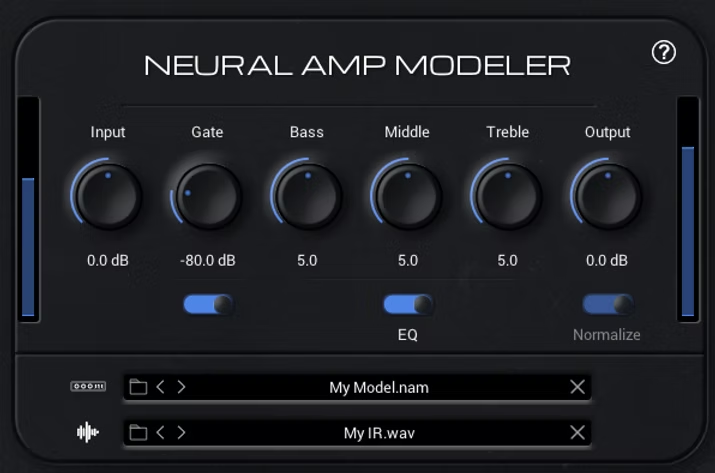
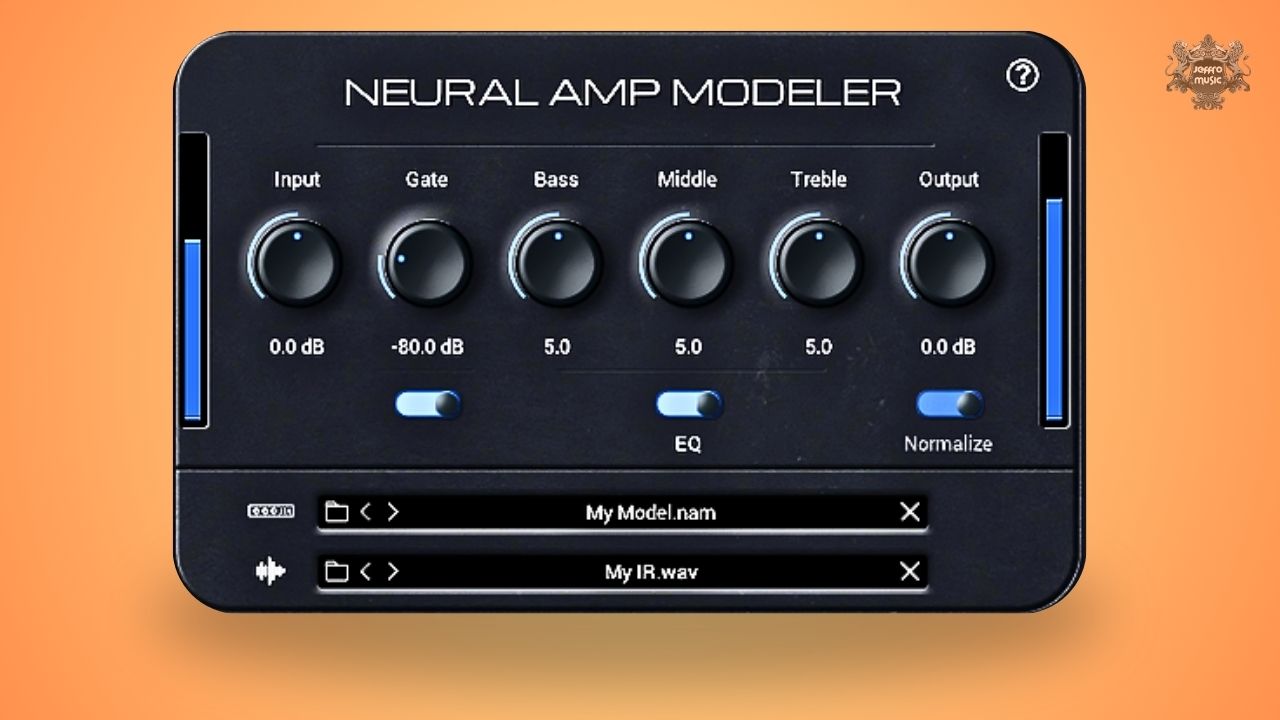
Neural Amp Modeler, better known as NAM, is a free, open-source AI technology that has quietly reshaped what’s possible in digital amp and gear modeling.
Instead of approximating analog behavior through circuit simulation, NAM listens to real hardware and learns how it actually responds.
The result is a new class of digital models that capture tone, dynamics, and feel with a level of realism that traditional amp sims struggle to reach.
NAM uses machine learning to analyse real audio recordings of analogue gear and train a neural network to reproduce the exact input-to-output behaviour.
This means it captures nonlinear details such as tube compression, transient response, and dynamic touch sensitivity that are notoriously difficult to model by hand.
Each capture results in a NAM model (also called a profile or snapshot) that behaves like the original amp, pedal, or signal chain.
These models are lightweight, portable, and compatible across multiple plugins and hardware platforms, avoiding ecosystem lock-in.
NAM is built for guitarists, bassists, producers, and engineers who care deeply about tone authenticity. It’s equally useful for home recording, professional studio work, live performance, and archiving rare or irreplaceable gear.
Whether you’re chasing pristine cleans, pushed vintage breakup, or modern high-gain sounds, NAM offers access to tones that would otherwise require expensive or impractical setups.
A major part of its appeal is the growing community around TONE3000, where tens of thousands of free models are shared, covering everything from classic amps to boutique pedals and full rigs.
NAM can be used in two main ways:
Capturing involves sending a calibrated sweep signal through real hardware, recording both input and output, and training a neural network to replicate the behaviour.
Training can be conducted locally using Python tools or online via Google Colab, making NAM accessible to users with varying technical backgrounds.
NAM’s open-source nature is a key reason for its rapid adoption. The technology, training tools, and formats are transparent, extensible, and community-driven.
This ensures long-term compatibility, constant improvement, and freedom from proprietary lock-ins that dominate much of the amp sim market.
A new standard for realistic digital gear modeling.
Traditional sims model circuits. NAM models real audio behaviour, resulting in more realistic dynamics and feel.
No. While amps are common, NAM can model pedals, preamps, outboard gear, and full signal chains.
Training typically takes between 5 and 20 minutes depending on model complexity.
No. Models are portable and designed to work across multiple plugins and supported hardware.