FILTER FORCE VST
filter force
Filter Force Free is a streamlined version of Unfiltered Audio’s dual filter powerhouse, designed to deliver fast, expressive sound shaping through intuitive modulation.
Built around high-quality filters and rhythmic sequencing, it’s an ideal tool for adding motion, width, and character to static sounds without getting lost in complexity.
System Requirements:
- 64-bit
- VST 2&3 / AU
- Windows
- MacOs
Filters & Sound Character
At its core, Filter Force Free is a dual creative filter bank with access to a curated selection of filter models drawn from Unfiltered Audio’s synth and effect ecosystem.
While the full version includes 21 filter types, the free edition offers two carefully chosen options that still cover a wide range of musical ground, from smooth tonal sculpting to more character-driven filtering.
These filters are designed to be modulated, encouraging movement rather than static EQ-style shaping.
Sequencer-Driven Modulation
Modulation is handled by two independent stereo sequencers in the free version, each capable of running different patterns on the left and right channels.
This true stereo approach makes it easy to introduce width and asymmetry, helping sounds feel wider and more alive.
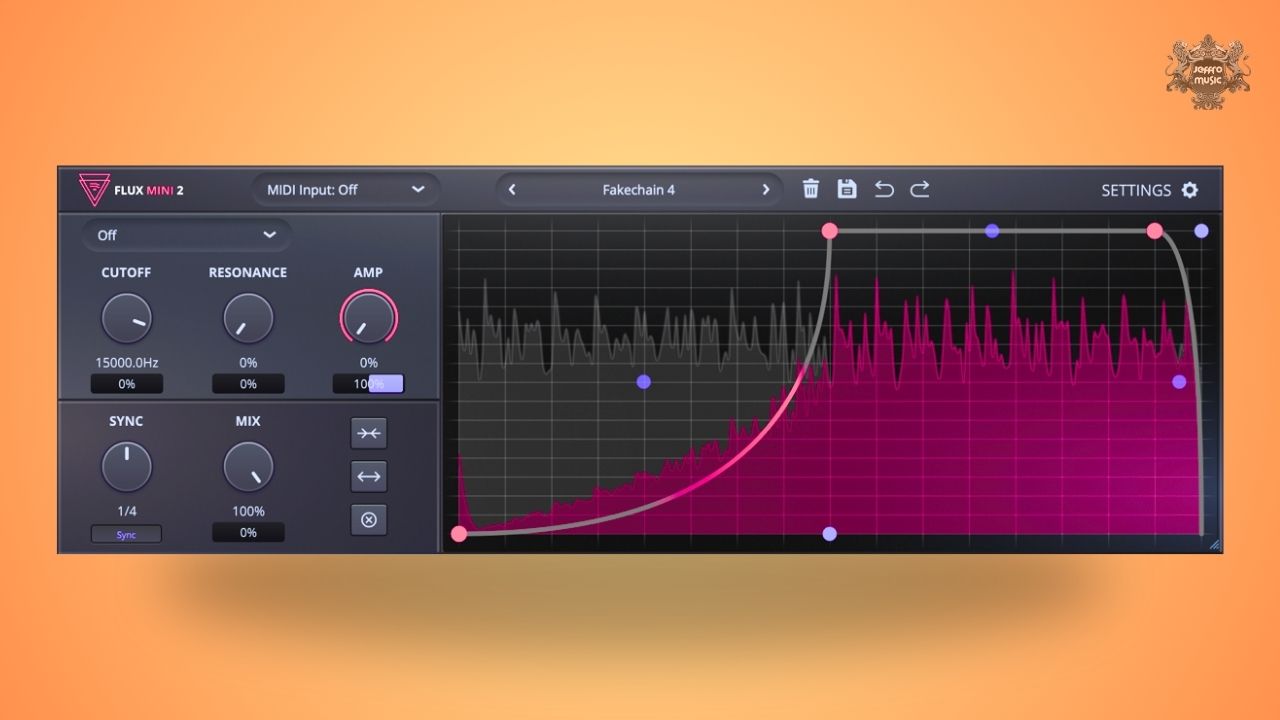
Editing modulation is quick and visual. You can draw curves manually using control points, switch to brush-based editing for fast results, or generate random modulation patterns for instant inspiration.
Sequencers can be synced to host tempo, triggered by MIDI notes, or allowed to run freely depending on the desired effect.
Workflow & Creative Use
Filter Force Free is designed to be immediate. The interface keeps modulation front and centre, making it easy to experiment, randomise, and refine ideas quickly.
It works equally well on synths, drums, guitars, and effects returns, especially where rhythmic filtering or evolving motion is needed.
Key Features:
A modulation-focused filter plugin built for creative movement.
- Dual creative filter bank
- Two selectable filter types in the free version
- Two independent stereo modulation sequencers
- True stereo modulation with separate left and right patterns
- Curve-based and brush-based modulation editing
- Random modulation generation
- MIDI-triggered, tempo-synced, or free-running sequencers
FAQ
The free version includes fewer filter types and sequencers, but still delivers the core modulation workflow and sound quality.
Primarily sound design and creative processing, though it can be used subtly for movement and width in a mix.
Yes. Independent left and right modulation adds depth and width that static or mono modulation cannot achieve.
Absolutely. Sequencers can be synced to the host or triggered via MIDI for tight rhythmic control.