FILTRON VST
filtron
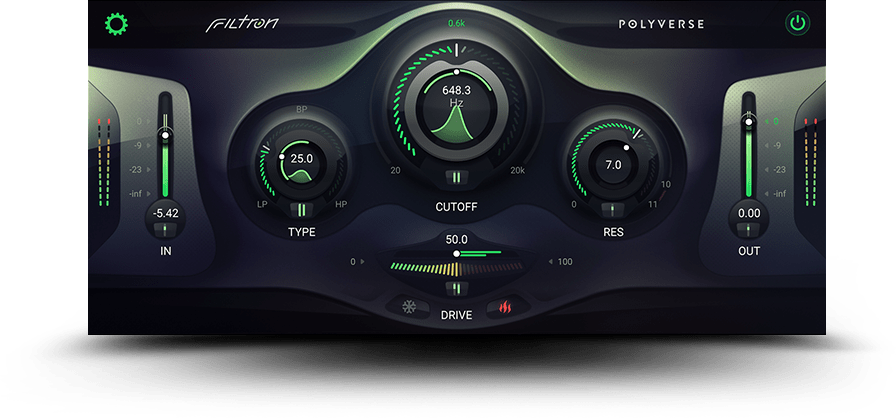
Filtron is a free, state-of-the-art digital filter that brings classic voltage-controlled behaviour into a modern production workflow. Built around a 12dB state-variable design, it smoothly morphs between low-pass, band-pass, and high-pass modes while adding serious character through saturation and overdrive. It’s a creative filter first and foremost, but one that’s equally comfortable handling mix duties or aggressive sound design.
System Requirements:
- 64-bit
- VST 2&3 / AU
- Windows
- MacOs
Filter Design & Saturation
At its core, Filtron features a 12dB state-variable filter capable of seamless mode transitions rather than fixed switching.
This makes cutoff sweeps feel fluid and musical, ideal for automation, performance, and evolving textures. The resonance can be pushed into self-oscillation, allowing Filtron to act almost like a tone generator when driven hard.
Internally, Filtron includes a warm saturation stage that responds dynamically to input level, followed by a post overdrive with two distinct modes.
Cold delivers sharp, aggressive distortion suited to acid lines and electronic leads, while Hot introduces a warmer, fuzzier character that works well on basses, guitars, and synth layers.
Modulation & CV Control
One of Filtron’s standout features is its control-voltage sidechain modulation. Parameters can be driven by external CV sources such as Polyverse’s Gatekeeper, with independent left and right channel modulation for complex stereo movement.
Filtron is also optimised for audio-rate modulation, opening the door to FM-style filter effects and extreme sound design.
Under the hood, the filter uses a zero-delay feedback design with internal oversampling, keeping resonance stable and clean even at extreme settings.
Workflow & Use Cases
Filtron’s interface is clean, modern, and resizable, striking a balance between style and usability. It’s fast to dial in, responds well to automation, and encourages experimentation. Whether you’re carving space in a dense mix, animating synths, or pushing filters into distortion-heavy territory, Filtron delivers results quickly without feeling like a gimmick.
Key Features:
A modern filter built for movement and character.
- 12dB state-variable filter
- Smooth morphing between LP, BP, and HP modes
- Self-oscillating resonance
- Internal saturation with dynamic response
- Post overdrive with Cold and Hot modes
- Stereo CV sidechain modulation
- Zero-delay feedback filter design
FAQ
Its ability to smoothly morph between filter modes, combined with saturation, overdrive, and CV modulation, makes it far more expressive than static digital filters.
Both. It’s effective for carving frequencies and taming harshness, but really shines when used creatively with automation or modulation.
Resonance can reach self-oscillation, making Filtron suitable for extreme sweeps, acid-style tones, and experimental effects.
Yes. With stereo modulation and level-dependent behaviour, Filtron can introduce subtle or extreme stereo character depending on how it’s driven.